Spiti Valley With Thrillophilia: Ankita Naik’s First Group Adventure
Thrillophilia Verified Booking
PNR: BKDU1BINROO
Rating: ★★★★★
Travellers: Ankita Naik | Ashutosh Chavan
Trip Duration: 8D / 7N
Date of Travel: 09 May 2026 - 16 May 2026
Destination: Spiti Valley
Ankita Naik had never been on a group trip before. So when she joined Thrillophilia’s 8-day winter journey through Spiti Valley, she was stepping into two unknowns at once: a completely new way of travelling and one of the most remote corners of the Himalayas.
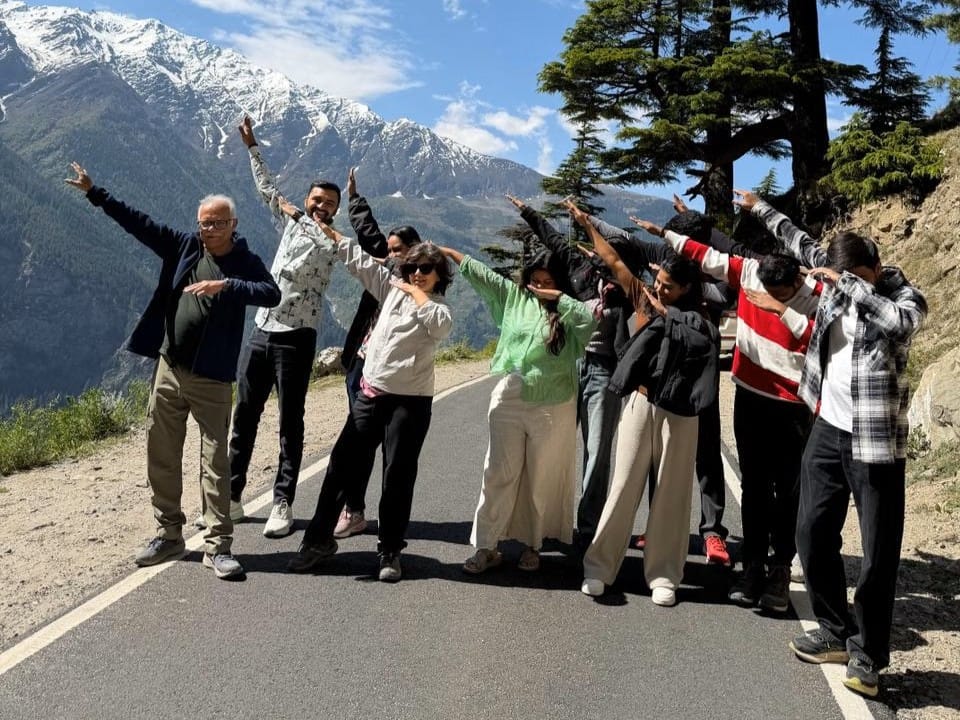
By the end of the trip, it was the people she travelled with that she remembered just as much as the mountains.
“The group was so good. People were so nice, and the guide, Neethima, was excellent. This was my first group tour, and I was so happy that I chose Thrillophilia. Thanks. I made very adventurous memories.”
And 'adventurous' is probably the right word. Over eight days, Ankita and fellow traveller Ashutosh Chavan went from Shimla into Kinnaur and Spiti, reaching places above 4,000 metres, crossing one of Asia’s highest suspension bridges, visiting monasteries that are centuries old and mailing a postcard from one of the highest post offices in the world.
The Road to Chitkul
The mountains started feeling serious as the group left Shimla behind.
The road wound deeper into Kinnaur, with pine forests giving way to sharper mountain slopes and the Baspa River appearing alongside the route. Their destination was Chitkul, sitting at around 3,450 metres (11,320 feet) and widely known as the last inhabited village on the Indian side of the Indo-Tibetan border. There is something wonderfully dramatic about that description. The last inhabited village. It makes the destination feel less like a sightseeing stop and more like the end of the road.
Chitkul sits in the Baspa Valley, surrounded by mountains and traditional Kinnauri homes. The village is also part of the old Hindustan-Tibet trade route. For Ankita, it was the first real taste of how remote this trip would become. The group stopped at Hindustan Ka Aakhri Dhaba, where a hot Himachali meal at roughly 3,500 metres made for a welcome break from the mountain roads. And somewhere between the long drive, shared food and unfamiliar faces becoming familiar, the first-time group tour started feeling less unfamiliar.
Nako, Where the Landscape Gets Stranger
The next stretch seemed to belong to another planet.
At Khab, the group reached the confluence of the Sutlej and Spiti rivers. The landscape around them was becoming increasingly barren, with huge mountains rising on either side of the road.
Then came Nako, a high-altitude village around 3,600 metres above sea level. Nako Lake offered a quieter moment. Willow and poplar trees surrounded the water, making an unexpectedly green patch in an otherwise stark landscape. Nearby, Nako Monastery and Nako Chango Gompa introduced the group to the Buddhist traditions that are woven into everyday life across Spiti.
And this is where a Spiti road trip becomes different from simply driving through mountains. You aren't just looking at peaks through a window. Every few hours, the road drops you into another tiny settlement with its own monastery, prayer wheels, homes and stories.
A 500-Year-Old Mummy and the Ajanta of the Himalayas
Spiti has a talent for producing travel stories that sound slightly unbelievable.
Take Gue Monastery. Inside this remote monastery is a naturally preserved mummy believed to be around 500 years old. The group got to see this unusual piece of Spiti's history before continuing towards Tabo. Then came one of the most important cultural stops of the journey: Tabo Monastery. Founded in 996 AD, Tabo is one of the oldest Buddhist monastic complexes in the Himalayas. It has nine temples, 23 chortens, ancient murals and meditation caves carved into the cliffs. Its collection of paintings and sculptures has earned it the nickname “Ajanta of the Himalayas".
The comparison isn't accidental. Like Ajanta, Tabo's importance lies in the art hidden within its walls. After the roar of mountain roads, walking into a centuries-old monastery with its dim interiors, murals and prayer-filled atmosphere must have felt like entering a completely different world.
Kaza, at 3,660 Metres
By the time Ankita reached Kaza, the group was firmly in high-altitude territory.
At around 3,660 metres, Kaza is the administrative headquarters of Spiti and the largest settlement on this route. But the real fun was still ahead. The next day took the group towards Key Monastery, perched at 4,166 metres above sea level. It is the largest monastery in Spiti and looks almost more like a fortress than a conventional monastery, with rooms and prayer spaces stacked into the hillside.
Then the group kept climbing.
At Hikkim, around 4,400 metres above sea level, Ankita could do something wonderfully ordinary in a very extraordinary place: send a postcard. Hikkim is home to one of the world's highest post offices. Suddenly, the idea of sending a postcard becomes much more fun when you're mailing it from a village perched high above the Spiti Valley.
Lunch at the Top of the World
If Hikkim was about sending a postcard, Komik was about asking yourself how high a village can actually be.
At around 4,587 metres, Komik is among the world's highest motorable settlements.
For Ankita and the group, this meant lunch surrounded by an almost surreal landscape of bare mountains, enormous skies and tiny settlements scattered across the valley.
And then came Chicham Bridge.
At roughly 4,145 metres, the bridge crosses a deep gorge, connecting the remote villages around Chicham and Kibber. Before the bridge existed, locals used a ropeway trolley to cross the gorge. Standing on it, with the mountains falling away beneath you, would be one of those moments when the word 'adventure' stops sounding like marketing language. You are simply there, very high up, very far from home, with a bunch of people you met on a group trip.
The Mountains Changed Again
Spiti does something clever on the road to Kalpa. Just when you think you've figured out its landscape, it changes again.
The route from Kaza passed through Dhankar, where the ancient monastery sits dramatically above the valley. Dhankar itself is perched at around 3,870–3,894 metres, depending on the reference point, and its monastery is believed to be around 1,200 years old.
From there, the group gradually left the stark, cold desert landscapes behind.
The mountains became greener. Pine forests returned. Apple orchards appeared around Kalpa, and the Kinnaur Kailash Range rose in the distance.
It was a fitting reminder of how much ground Ankita had covered. The trip had begun in Shimla, moved through Kinnaur and taken her deep into Spiti before bringing her back towards the greener side of Himachal.
Why Ankita Recommends Thrillophilia for Your Next Trip?
For all the altitude numbers, monasteries and mountain roads, Ankita's review comes back to something much simpler.
The people.
She had never done a group tour before, yet the group turned out to be one of her favourite parts of the experience. New faces became travel companions through long drives, meals, photographs and days spent exploring places that most people only ever see in photographs.
She also specifically remembered Neethima, the guide who accompanied the group. Ankita called her “excellent”, a small but telling detail in a review where she could easily have focused only on the destinations.
Spiti itself is often described through its landscape. Rudyard Kipling famously called it “a world within a world", a phrase still used by Incredible India to describe the valley.
For Ankita, though, her first group trip added another layer to that world.
There were the impossibly high villages, ancient monasteries, narrow mountain roads and enormous Himalayan landscapes. But there were also jokes with strangers who became friends, shared meals, a guide who made an impression and the feeling of discovering an unfamiliar place together.
That is probably why her final description of the trip is so uncomplicated.
She came for Spiti.
She left with adventurous memories and a group of people who made the journey better.
Also Read: Archana’s Family Adventure in Manali with Thrillophilia